.png)


Funeral Expense Coverage: Protecting Family Finances
- Lincoln De Freitas
- 3 days ago
- 8 min read

Most American families are surprised to learn that funeral costs routinely reach $7,000 to $12,000, straining even well-prepared budgets at a time of grief. Planning ahead for these expenses matters more than ever, especially for older adults wanting peace of mind about their family’s financial future. This guide unpacks funeral expense coverage, explains guaranteed issue life insurance solutions, and reveals how to avoid common pitfalls without breaking the bank.
Table of Contents
Key Takeaways
Point | Details |
Understand Funeral Expense Coverage | Funeral expense coverage protects families from unexpected costs associated with end-of-life services, which can vary widely based on location and chosen services. |
Policy Types Are Essential | Familiarize yourself with types of funeral insurance policies, such as Final Expense, Burial Insurance, and Pre-Need policies, to choose the best option for financial planning. |
Payout Process Matters | Be aware of the payout process, including documentation requirements, to ensure quick financial relief during a difficult time. |
Explore Alternatives | Consider government assistance programs, community support, or crowdfunding as alternative means to manage funeral costs, which may alleviate financial burdens without relying solely on insurance. |
Funeral Expense Coverage Defined and Debunked
Funeral expense coverage represents a critical financial safety net designed to protect families from unexpected end-of-life costs. This specialized insurance helps mitigate the substantial financial burden that funeral services can impose during an already emotionally challenging time. Understanding the nuanced landscape of funeral expenses is essential for effective family financial planning.
Contrary to common misconceptions, funeral expenses are not uniform or predictable. Funeral expense coverage variations depend on multiple factors including geographical location, selected services, and individual family preferences. Some families might require basic cremation services, while others opt for more elaborate memorial arrangements. These choices significantly impact overall funeral costs, which can range from $5,000 to $20,000 depending on specific selections.
The complexity of funeral expense coverage extends beyond simple monetary compensation. Government and private insurance programs typically consider reasonable expenditures that encompass not just the funeral service itself, but also associated costs like transportation, documentation, and potential repatriation expenses. Funeral expense assistance regulations emphasize equitable support, ensuring that bereaved families receive appropriate financial assistance without undue bureaucratic hurdles.
Pro tip: Request itemized pricing from funeral directors to understand exactly what services are included in your potential coverage and identify potential out-of-pocket expenses.
Policy Types: Final Expense, Burial, Pre-Need
Funeral insurance policies offer families multiple financial protection strategies to manage end-of-life expenses. These specialized insurance products are designed to provide financial relief during emotionally challenging times, ensuring that loved ones are not burdened with unexpected funeral costs. Funeral policy types vary significantly in their coverage, terms, and application.
Final expense insurance represents a broad category of coverage specifically intended to cover funeral costs and related end-of-life expenses. Unlike traditional life insurance, these policies focus on immediate financial needs, typically offering smaller coverage amounts ranging from $5,000 to $25,000. Burial insurance, a subset of final expense coverage, is more narrowly focused on direct funeral service expenses, often with simplified medical underwriting that makes qualification easier for older adults.

Pre-need funeral insurance introduces a unique approach by allowing individuals to prepay and pre-plan funeral arrangements directly with a specific funeral home. Funeral expense assistance programs highlight the importance of understanding each policy type’s specific parameters. These policies often include detailed contracts specifying exact services, allowing individuals to lock in current pricing and relieve family members from making difficult financial decisions during grief.
Pro tip: Compare multiple policy types and request detailed written explanations of coverage to understand exact terms, exclusions, and potential out-of-pocket expenses before making a final decision.
Here’s a comparison of common funeral insurance policy types and their main characteristics:
Policy Type | Application Method | Coverage Focus | Flexibility |
Final Expense | Through insurance provider | Broad end-of-life costs | Moderate; several rider options |
Burial Insurance | Simplified underwriting | Funeral service only | Limited; fixed payout amount |
Pre-Need Insurance | Via funeral home contract | Specific funeral services | High; services and costs locked in |
How Eligibility, Premiums, and Benefits Work
Funeral expense insurance policies come with complex eligibility requirements that vary significantly across different providers and government assistance programs. Funeral expense assistance regulations outline specific criteria that determine an individual’s qualification for financial support, typically based on income levels, current benefit receipt, and relationship to the deceased.
Premium structures for funeral expense coverage are designed to be accessible, particularly for older adults and individuals with limited financial resources. Most policies feature age-based pricing, with premiums increasing as applicants grow older. Younger applicants typically enjoy lower rates and more flexible underwriting, while those over 50 might encounter higher premiums and more stringent medical screenings. Guaranteed issue policies eliminate medical examinations entirely, providing coverage for individuals with pre-existing health conditions, though these often come with higher monthly costs.
Benefits from funeral expense insurance are specifically tailored to cover end-of-life expenses, including funeral service costs, transportation, cremation or burial fees, and sometimes additional expenses like outstanding medical bills. Next of kin responsibilities play a crucial role in understanding how these benefits are processed and distributed, with most policies designed to provide quick payouts to minimize financial strain on grieving families.
Pro tip: Request a detailed breakdown of premium calculations and benefit structures from multiple insurance providers to compare true long-term costs and coverage options.
What’s Actually Covered and Typical Costs
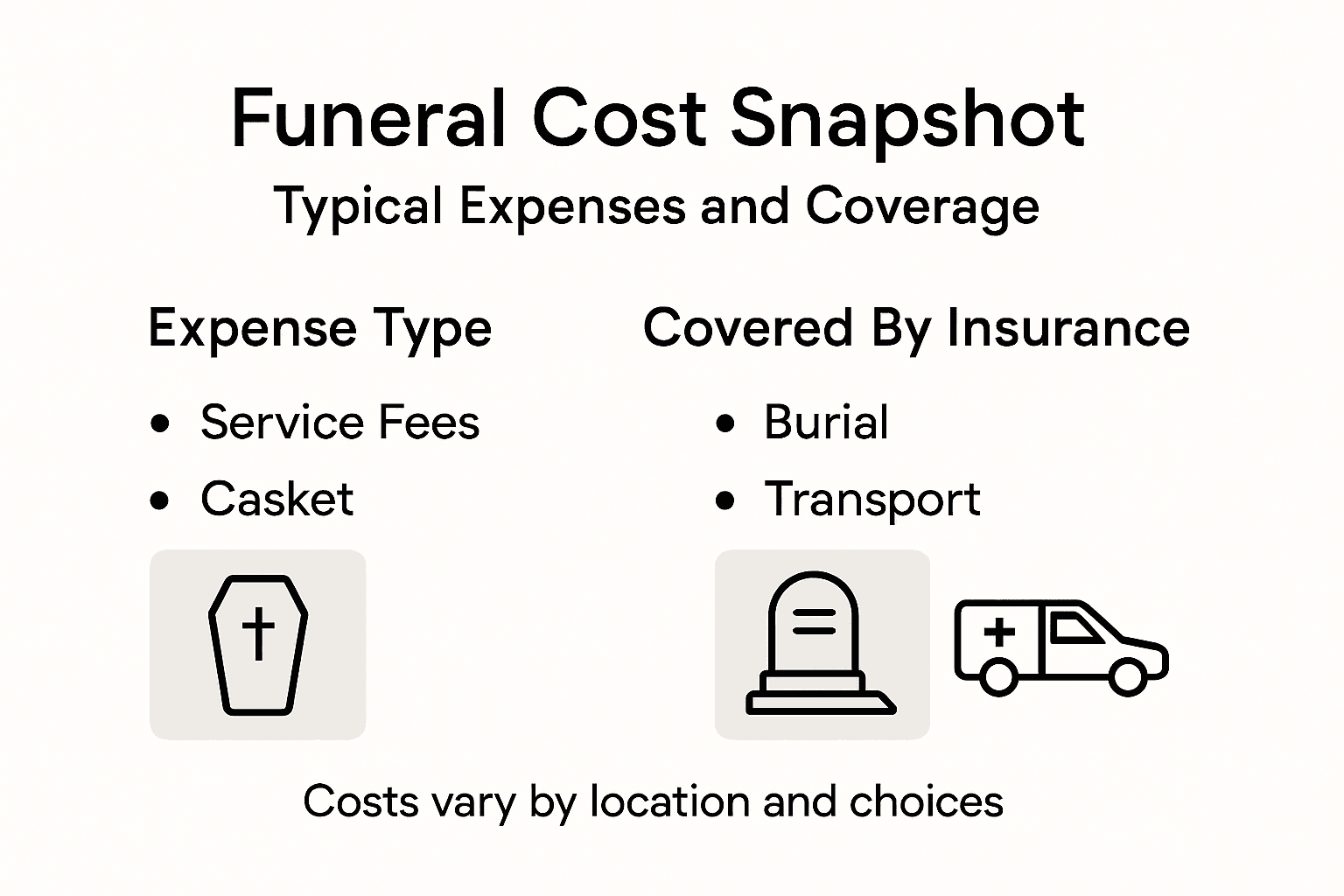
Funeral expense insurance provides comprehensive coverage for a wide range of end-of-life expenses, extending far beyond simple burial or cremation fees. Funeral expense assistance programs typically include essential services such as transportation of remains, funeral service costs, casket or urn expenses, burial plot or cremation fees, and sometimes additional administrative expenses related to processing death certificates and legal documentation.
Typical funeral costs can vary dramatically based on geographic location, selected services, and individual preferences. In the United States, standard funeral expenses range from $7,000 to $12,000 for traditional burial services, while cremation options can be more affordable, averaging between $1,000 and $3,500. Funeral cost components break down into several key categories: professional service fees, transportation, embalming, casket or urn, venue rental, headstone or memorial marker, and optional extras like flower arrangements or catering for memorial services.
Most comprehensive funeral expense policies cover core services, but families should carefully review policy details to understand potential coverage limitations. Some policies may exclude specific types of services or have maximum payout limits that could leave families responsible for additional expenses. Optional coverage riders can help fill potential gaps, providing more extensive protection against unexpected funeral-related costs.
Pro tip: Request a detailed, itemized list of covered expenses from your insurance provider and compare multiple policies to ensure comprehensive financial protection for your family.
To help evaluate funeral expense policies, here’s a summary of key benefit and cost categories:
Expense Category | Typical Cost Range | Frequently Covered by Policies |
Funeral Service Fees | $2,000–$6,000 | Yes; often fully covered |
Transportation of Remains | $300–$1,000 | Usually covered |
Casket or Urn | $1,000–$4,000 | Often included |
Burial Plot/Cremation Fee | $800–$4,000 | Usually covered |
Payout Process, Tax Impact, and Common Pitfalls
The payout process for funeral expense insurance involves several critical steps that families must understand to ensure smooth financial resolution during an emotionally challenging time. Funeral expense assistance regulations typically require beneficiaries to submit detailed documentation, including death certificates, itemized funeral expense receipts, and proof of relationship to the deceased. Most reputable insurance providers aim to process claims within 7 to 14 business days, providing relatively quick financial relief to grieving families.
Tax implications for funeral expense insurance payouts are generally straightforward and favorable for recipients. In most cases, benefits paid directly for funeral expenses are not considered taxable income, offering a significant financial advantage during a difficult period. However, families should be aware that any remaining funds from the policy that are not directly applied to funeral costs might be subject to different tax treatments. Next of kin responsibilities play a crucial role in understanding these nuanced financial considerations and ensuring proper allocation of funds.
Common pitfalls in funeral expense insurance can derail families’ financial planning if not carefully navigated. These include failing to disclose complete medical history during application, misunderstanding policy exclusions, or not updating beneficiary information. Some policies may have waiting periods or specific conditions that limit immediate payouts, and certain pre-existing conditions could impact coverage. Families should carefully review policy details, ask detailed questions about potential limitations, and consider supplemental coverage to address any potential gaps.
Pro tip: Maintain an organized file with all insurance policy documents, medical records, and potential beneficiary information to streamline the claims process during an already stressful time.
Alternatives to Insurance for End-of-Life Costs
Families facing end-of-life expenses have multiple alternatives to traditional funeral insurance that can help manage financial burdens. Funeral expense assistance programs offer government-supported options that can provide critical financial relief for those struggling with funeral costs. These alternatives include direct social security benefits, community support programs, and targeted financial assistance designed to reduce the economic strain of funeral expenses.
Governmental support mechanisms represent a significant alternative to private insurance. Some states and local jurisdictions offer specialized funeral expense assistance that considers socioeconomic factors, providing targeted support for low-income families. Social policy alternatives can include direct payment programs, reduced-cost cremation services, and subsidies that help families manage funeral expenses without relying on commercial insurance products.
Additional alternatives include crowdfunding platforms, community fundraising, veteran’s benefits, and religious or cultural organization support programs. Some employers offer modest death benefit packages, and certain credit unions provide low-cost funeral expense loans. Prepaid funeral plans through funeral homes can also serve as an alternative, allowing families to lock in current prices and make incremental payments over time, potentially reducing overall financial strain.
Pro tip: Research local government and nonprofit resources in your specific area, as funeral expense support options can vary significantly by location and community.
Secure Your Family’s Peace of Mind with Trusted Funeral Expense Coverage
Dealing with funeral expenses can be overwhelming and expensive at a time when your family needs support the most. This article highlights the challenges of unpredictable costs and complex insurance terms that many families face during end-of-life planning. If you want to protect your loved ones from financial strain and ensure your funeral expenses are covered clearly and compassionately, personalized insurance solutions are essential.
Explore affordable and transparent final expense insurance options designed for middle-aged and senior adults. Whether you need guaranteed issue life insurance, term life, or permanent policies, LD Financial Services offers simple application processes and quick approvals with fixed premiums. Understanding policy types like final expense, burial, and pre-need insurance can empower you to make confident decisions that safeguard your family’s financial future.
Make your next step today by visiting LD Financial Services, where compassionate agents provide tailored advice and guide you through securing coverage that fits your needs.

Don’t wait until it’s too late. Connect with licensed agents now to review your options, get your questions answered, and take control of your end-of-life financial planning with ease. Learn more about final expense insurance and the protection it offers your family when it matters most.
Frequently Asked Questions
What is funeral expense coverage?
Funeral expense coverage is a type of insurance designed to help families manage the financial burden of funeral costs, providing a safety net during a difficult time.
How do different types of funeral insurance policies vary?
Funeral insurance policies, such as final expense, burial insurance, and pre-need insurance, differ in their coverage focus, application process, and flexibility, catering to specific financial needs related to end-of-life expenses.
What factors affect the cost of funeral expenses?
The cost of funeral expenses can vary widely based on factors such as geographical location, selected services, and individual family preferences, with overall costs ranging from $5,000 to $20,000.
What should I know about the payout process for funeral expense insurance?
The payout process for funeral expense insurance generally requires beneficiaries to provide documentation like death certificates and itemized receipts, with most providers aiming to process claims within 7 to 14 business days.
Recommended